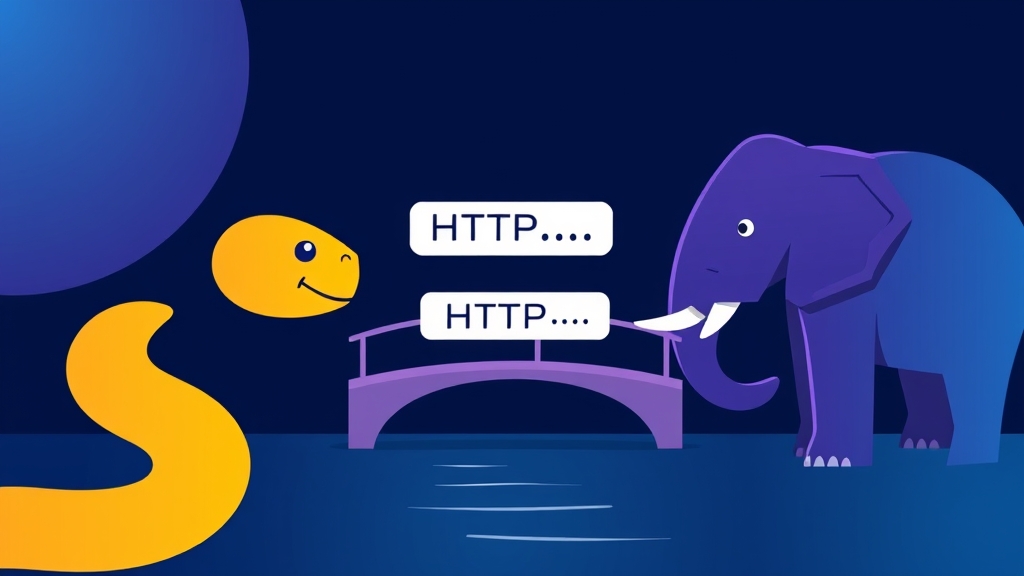
Sometimes Python already has a great package for scraping web data, but all the downstream processing is in PHP. The question is: how do you pass a Python requests response back to PHP intact?
1
| composer require guzzlehttp/psr7 symfony/process
|
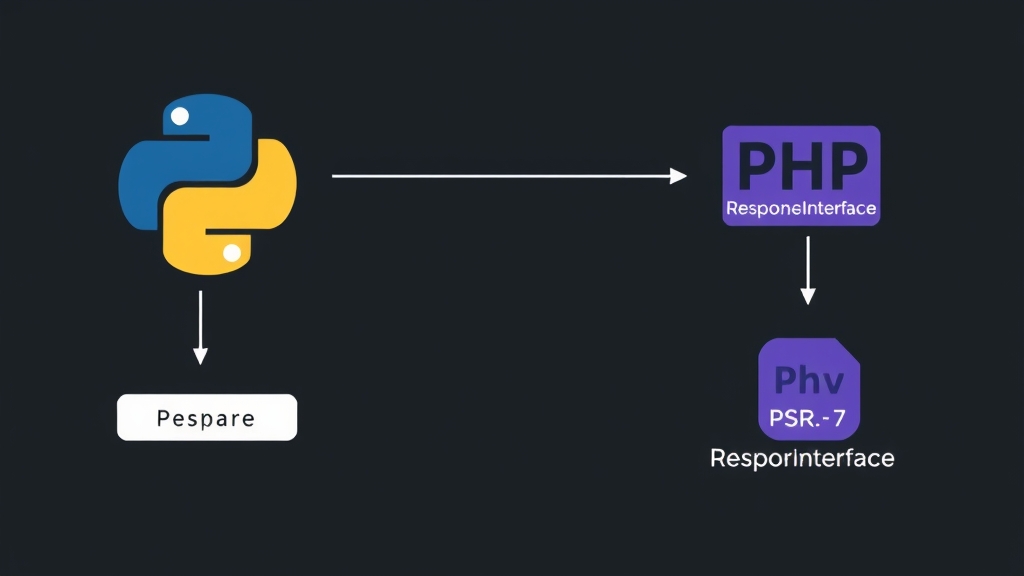
HTTP messages are a plain-text protocol, and PSR-7 defines a standard message interface. As long as the Python side outputs the response as an HTTP message string, PHP can parse it directly into a ResponseInterface using GuzzleHttp\Psr7’s Message::parseResponse — no manual header/body splitting needed.
Python Side: Convert requests Response to PSR-7 Message
 1
 2
 3
 4
 5
 6
 7
 8
 9
10
11
12
13
14
15
16
17
18
19
20
21
22
23
24
25
26
27
28
29
30
31
32
33
34
35
36
37
38
39
40
41
42
43
44
45
46
| import argparse
from urllib.parse import urlparse
import requests
from requests import Response, PreparedRequest
parser = argparse.ArgumentParser()
parser.add_argument("url")
args = parser.parse_args()
def has_header(headers, key: str, value: str = None):
for (k, v) in headers:
if k.lower() == key.lower() and (value is None or v.lower() == value.lower()):
return True
return False
def psr7_message(message: PreparedRequest or Response) -> bytes:
msg = ""
body = bytes()
if isinstance(message, PreparedRequest) is True:
msg = "%s %s HTTP/1.1" % (message.method, message.url)
body = message.body if message.body else bytes()
if "host" in map(lambda header: str(header[0]).strip().lower(), message.headers):
msg += "\r\nHost:" + urlparse(str(message.url)).hostname
if isinstance(message, Response) is True:
msg = "HTTP/1.1 %s %s" % (message.status_code, message.reason)
body = message.content
headers = message.headers.items()
headers = filter(lambda header: has_header([header], "Transfer-Encoding", "chunked") is False, headers)
headers = filter(lambda header: has_header([header], "Content-Encoding") is False, headers)
headers = sorted(list(headers))
msg += "".join(["\r\n%s: %s" % (name, value) for name, value in headers])
return ("%s\r\n\r\n" % msg).encode("utf-8") + body
def main(url):
resp = requests.get(url)
print(psr7_message(resp).decode('utf-8').replace(u'\xa0', u' '))
if __name__ == '__main__':
main(args.url)
|
The key is filtering out Transfer-Encoding: chunked and Content-Encoding headers to avoid parsing issues on the PHP side.
PHP Side: Implement PSR-18 ClientInterface
On the PHP side, implement ClientInterface to call the Python script via Symfony Process, then parse the output into a ResponseInterface using Message::parseResponse.
 1
 2
 3
 4
 5
 6
 7
 8
 9
10
11
12
13
14
15
16
17
18
19
20
21
22
23
24
25
26
27
28
29
30
31
32
33
34
35
36
37
38
39
40
41
42
43
44
45
46
| namespace App\Services;
use GuzzleHttp\Psr7\Message;
use GuzzleHttp\Psr7\Response;
use Psr\Http\Client\ClientInterface;
use Psr\Http\Message\RequestInterface;
use Psr\Http\Message\ResponseInterface;
use Symfony\Component\Process\Exception\ProcessFailedException;
use Symfony\Component\Process\ExecutableFinder;
use Symfony\Component\Process\Process;
class ScraperClient implements ClientInterface
{
private static ?string $python = null;
public function sendRequest(RequestInterface $request): ResponseInterface
{
try {
$process = new Process([
$this->findPython3(),
resource_path('path/to/main.py'),
(string)$request->getUri(),
]);
return Message::parseResponse($process->getOutput());
} catch (ProcessFailedException $e) {
return new Response(500, [], $e->getMessage());
}
}
private function findPython3(): string
{
if (! self::$python) {
$executableFinder = new ExecutableFinder();
foreach (['python3', 'python'] as $binary) {
$python = $executableFinder->find($binary);
if ($python) {
return self::$python = $python;
}
}
}
return self::$python;
}
}
|
Since it implements ClientInterface, you can use it just like any other HTTP client in PHP. When you need to switch back to Guzzle or another client, just swap the implementation.
References